
From 0 to 1
Hi, I’m Thierry, your host and film integrist. Born in an analogue world in the late 70’s, I grew up along with Digital, a baby technology at the time. Early adopter by accident, I had my first home computer around 1984 (Apple II+) and quickly discovered what would become the “multimedia” in the late 80’s with my second computer (Apple IIGS).
But my mind got vitrified when Commodore released the Amiga. This machine was so ahead of its time, that it would redefine the rules of the game. Digital was no longer an unaffordable technology or a gimmick to sell poorly mastered CDs. It could bring you new creative tools or even different ways to consume medias. For instance, my home computer was plugged to my stereo, beside my turntable and CD player, to serve as a digital music player, way before .mp3 and .mp2 was a thing!
In Cinema, the possibilities seemed limitless as well, titling, editing and computer generated images were mind blowing. My generation had its own Star Wars with Terminator II, the pinnacle of digital use at the movies for me. I will never forget the day I saw that film at the theater! I’ve had never seen anything like this. De facto, defining myself as anti-digital would be hypocrite. In 2000, I even attempt one of the very first theater digital projection in Paris.
“That’s How It Always Starts. But Then Later, There’s Running And Screaming.”
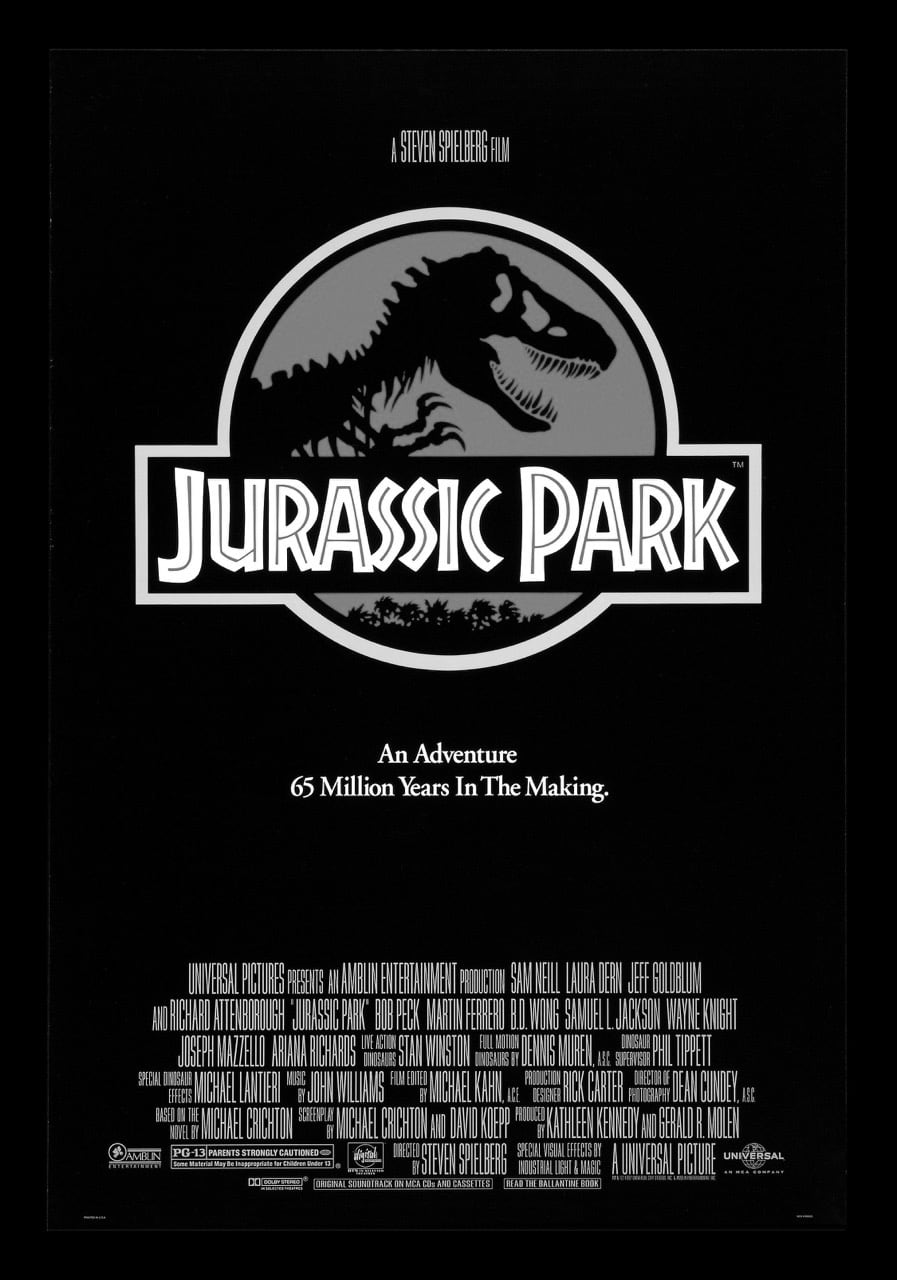
Despite this logical evolution, something started to feel wrong. I would trace its origins at Jurassic Park. As I said before, Terminator II was the perfect balance between the use of analogue and digital at the movies.
Digital was a tool, beyond others in the filmmaker toolbox, as well as make-ups, costumes, miniatures, animatronics, matte painting, etc….But as fascinating as it was, Jurassic Park went further…too far. By recreating virtual dinosaurs, Digital had replaced the practical special effects, the animatronics (and Phil Tippett). This would be the beginning of a long “analagony”. Later on, everything else would be replaced by digital…even the actors. It was no longer a tool in the box, it became and replaced the whole box! And I think sincerely that we lost something here.
2010 a Spasm Odyssey
While Sound already started its digital conversion in the late 70s, followed logically Photography, Video then Television. Books, Comics (and Radio) are still resisting today and are beyond the last analogue bastion, but the cyber-vultures are not far. And guess what was left to be turned into 0 and 1?
The first nail of the coffin was delivered in the early 2000’s with the first major Motion Pictures captured on high definition digital video. Then followed the whole production line, editing, color grading. But this was nothing compare to the coup de grâce in the 2010’s when the Movie industry decided to move away from 35mm film, forcing Hollywood and the Cinema Operators to upgrade…or die. Everything would be digital from start to finish, but wait…is that still Cinema?
8th, 10th (or 11th) Art
And here we are, the everlasting battle between 35mm and Digital. Grab a beer or a book, I have a lot to tell you!
As I said before, I grew up with Digital and followed its (r)evolution with huge interest. And it has been feeding me since 2000. But we reached a point where everything is digital…that it doesn’t really mean anything anymore. Each form of media is reduced to data. To exist, this data is generated by digitalizing reality or from scratch by a computer brain. It’s convenient to transport, copy, manipulate but didn’t we loose any connection with the original scene? After all, this information is the recreation, an emulation, of a reality. You don’t see what the medium captured, but its conversion by a machine. With celluloid, the light was directly captured by a chemical process on film. Every print, coming from the camera negative, was somewhat a direct descendant of the original signature left by the light during the production. A direct connection with captured reality. Digital, or Video like it would be more accurate to call it, translates the light into electric signals. Same signals that will need to be translated again into light for us humans to see it. Digital Cinema is the contemplation of a reality interpreted by a machine, a software, a codec. It’s like reading a book written in english, translated in Italian and retranslated in english. The information is still here, but is it totally the same?
Furthermore, the tools used to accomplish this are not the ones that came originally. Tools are meant to evolve indeed, hand cranked cameras got motorized, then came sound, colors, 3D, but isn’t there a limit? A limit where it becomes a different Art, 8th (Television for its use of video) or 10th/11th (Digital Art). It is definitively a form of Art, just not the 7th, the Cinématographe, anymore.
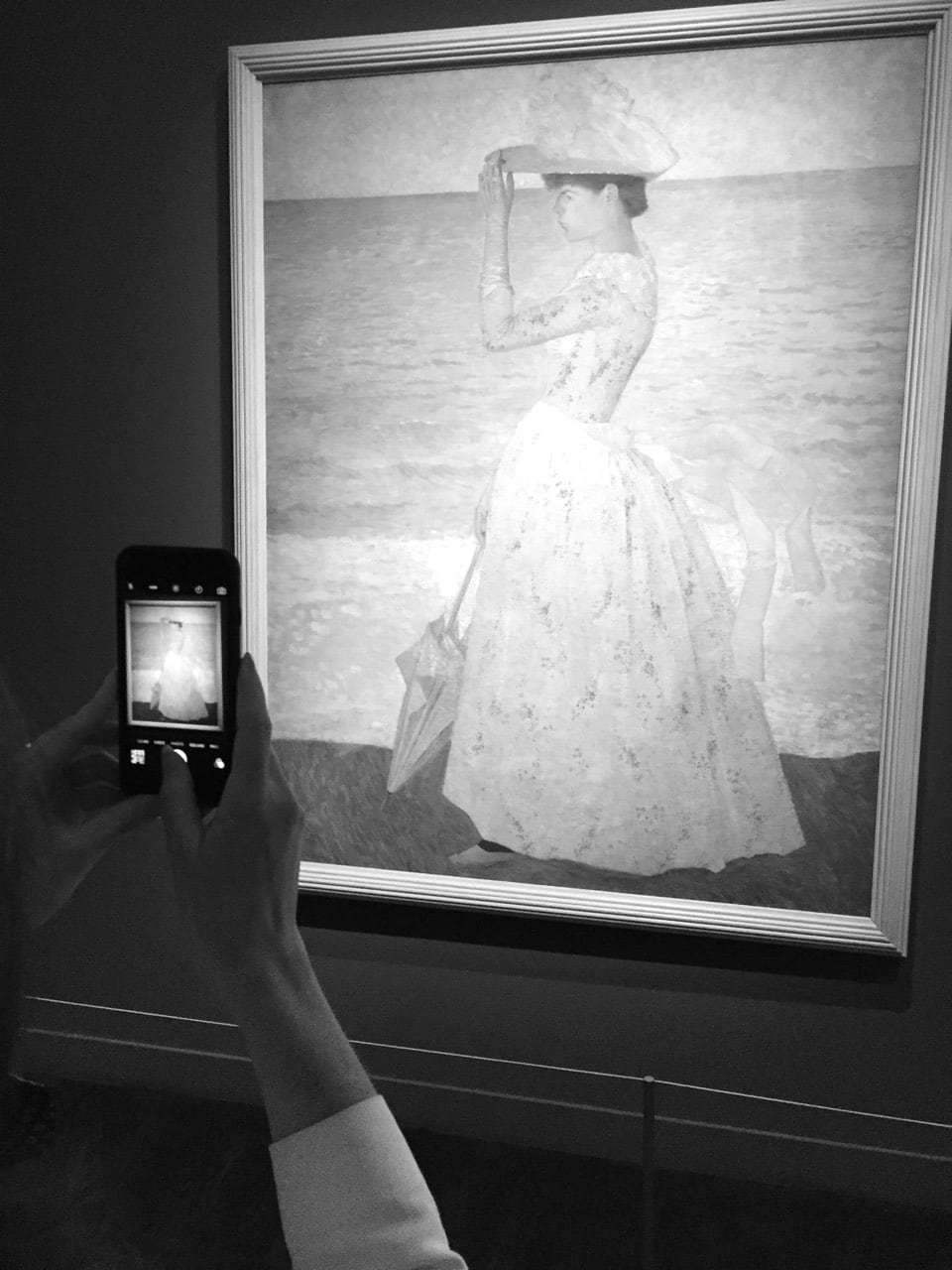
Now, I can hear the sound of rocks threw at me and angry people screaming that Art is separated from its tools. I agree for Architecture or Poetry. A poem will have the same power while written on a wall than on a papyrus. But I agree to disagree for Cinema, as well as Sculpture or Painting. 3D modeling and 3D printing is digital Art, but not Sculpture. By sculpture I expect a block of material curved by the artist. The same for painting, I want to see what Veronese saw, not photoshop. I want to see spread paint on canvas by Monet himself, not a .jpeg file on a LCD screen.
The Projection Paradox
Ironically, Cinema became was it was fighting in the 50’s, Television. Would it even still need to be projected then? A few Theaters crossed that river by proposing giant LED screens (Onyx theater). After all, it’s video, who cares about the technology used to show it, as long as you see it, no? On top of that, active screens allow a fantastic range of colors and contrast.
Hum…yes…but no, I couldn’t totally endorse this. Film or video projection let you see a reflection of the picture (preferably on a screen). The light travels in the same direction as your eyes perception. With active screens, the image is created in front of you and sent toward you, like a television set. Let’s not mention the higher fatigue caused by this process and that tsunami of blue light that will make us all blind. Spend 24 hours watching projected films Vs in front of a giant TV and you’ll see what I am talking about. But wait, there’s really people watching movies for 24 hours in theater?
I confess that this part might be the most controversial and fanboy-istic. But next time you spend 20 bucks and more for a movie ticket, don’t forget that you’ll do it to watch a video file played from a hard drive, and sometime screened on a big TV like home.
Grain do not kill

The saddest part is that a whole generation of viewers is getting used to the clinical image provided by digital. On the other side, celluloid picture with its grain and imperfection feels more alive and organic. Even static, the image has moving parts. Digital is perfect and cold but real life is not an Instagram filter. It’s great for certain use like documentary, fantastic for sport events. I also get that DPs and Directors use it for an artistic purpose too. The stories exist primarily because they have tellers, their vision doesn’t have to depend of the narration tools.
But…there’s always a but, Digital doesn’t have to be the only choice. At least, leave us a chance to see films in their original format and let creators using the film tools. I wish it could have a better balance between film and video. A technology evolution doesn’t always have to wipeout the other…especially when the other is the original foundation. And this is the mission of Kinhikàna Cinema, bringing you films the way it was intended to be seen, in its purest form.
Because Cinema lives on film, not on file.